What to know about hazardous waste cleaning disposal in W8
Hazardous waste cleaning disposal in W8 is one of those topics people usually only think about when something has already gone wrong. A broken bottle of chemicals in a flat. A leaking container in a basement storage room. A stubborn stain that turns out to be something more serious than dirt. Suddenly, you are dealing with risk, not just mess. And that changes everything.
This guide explains what to know about hazardous waste cleaning disposal in W8 in clear, practical terms. You will learn what counts as hazardous waste, how safe cleanup and disposal usually work, what mistakes to avoid, and how to judge whether a situation needs specialist support. If you are a homeowner, landlord, business owner, or facilities manager in the W8 area, this is the kind of information that helps you act calmly rather than improvise. To be fair, improvising with hazardous materials is rarely a great plan.
Along the way, we will also cover compliance-minded best practice, local expectations, and a few real-world scenarios that make the process easier to picture. If you need broader property-care support after a difficult incident, it can also help to understand related services like stain removal, steam carpet cleaning, and upholstery cleaning-though hazardous waste itself should always be handled first and separately.
Why hazardous waste cleaning disposal in W8 matters
Hazardous waste is not just "difficult rubbish". It can include substances or contaminated materials that may irritate skin, damage surfaces, release fumes, or create a fire and environmental risk if handled badly. In a busy place like W8, where homes, shops, managed buildings, and small offices sit close together, one poor decision can affect more than the original space.
The key issue is control. Once hazardous material is spilled, soaked into fabric, spread across a floor, or mixed with ordinary waste, it becomes harder to contain. That can lead to odour, contamination, lingering residue, and possible exposure for occupants or cleaning staff. In a shared hallway or commercial setting, that risk can multiply quickly. One bottle tipped over behind a bin store may not sound dramatic. In practice, it can be a headache for everyone.
There is also the matter of trust. People expect waste disposal to be handled responsibly, especially where chemicals, bodily contamination, batteries, sharps, solvents, or other dangerous materials are involved. If a landlord, business, or property manager cuts corners, the consequences can include complaints, disruption, and avoidable cost later on. Sometimes the "cheap fix" is the expensive one in disguise.
Expert summary: The safest approach is simple: identify the material, isolate the area, avoid mixing waste streams, use proper protective measures, and arrange lawful disposal through an appropriate route. Anything else is guesswork.
How hazardous waste cleaning disposal works
Although each incident is different, the process usually follows a clear sequence. The point is to reduce exposure first, then clean, then dispose. Not the other way around.
1. Identify the hazard
Before touching anything, determine what you are dealing with. Is it a chemical spill, contaminated absorbent material, broken fluorescent lighting, paint residue, bodily fluid contamination, mould-affected waste, or something else? If the substance is unknown, treat it as hazardous until confirmed otherwise. That cautious mindset saves trouble.
2. Assess the immediate risk
Look at the size of the spill, ventilation, the presence of children or pets, whether there are fumes, and whether surfaces have been penetrated. A splash on sealed tile is very different from contamination that has soaked into carpet underlay or a porous skirting board. This is where the real judgement call begins.
3. Isolate and control the area
Keep people away. Open windows if it is safe to do so. If the material could react with air, water, or other substances, do not start experimenting. Shut the area down and keep foot traffic out. In a shop, that might mean cordoning off a corner. In a flat, it might mean closing the room and limiting access.
4. Use suitable protective equipment
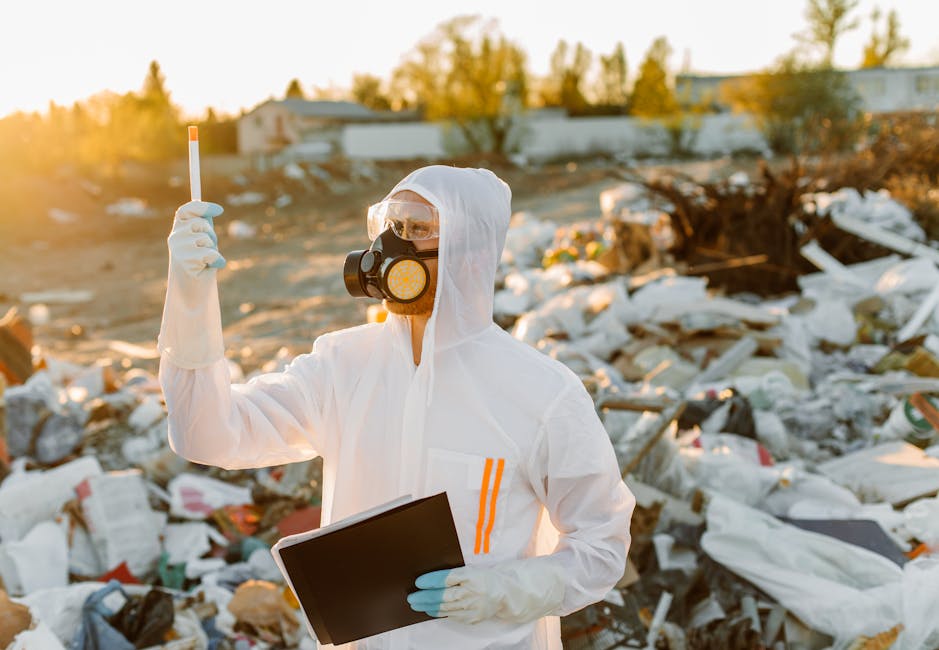
Professional cleaners use gloves, eye protection, masks or respirators where appropriate, and sometimes disposable coveralls. The exact kit depends on the contamination, but the principle is the same: protect the body before touching the waste. Casual cleaning gloves are not a universal solution, despite what some people hope.
5. Remove contaminated material safely
Any absorbent material, disposable cloths, PPE, or affected waste must be collected in a way that avoids spreading contamination. The waste is then segregated according to its type. This matters because hazardous waste should not be thrown in with ordinary rubbish. Once mixed, the entire load can become harder to manage.
6. Clean and decontaminate the area
After removal, the area is cleaned using appropriate methods for the substance and surface. For example, a hard floor may need neutralising and wiping, while fabric may need specialist treatment or in some cases replacement. If the contamination has reached soft furnishings, the approach may overlap with other services such as carpet cleaning or sofa cleaning, but only after the hazardous material has been safely contained and the item is judged suitable for treatment.
7. Store, label, and dispose correctly
Waste must be bagged, labelled, and transferred through the correct disposal route. In many cases, specialist carriers or licensed disposal channels are required. The exact documentation and handling expectations depend on the waste stream. This is where many people get stuck, because "just bin it" is not a proper plan for hazardous material.
8. Record what happened
Good practice includes keeping notes on the type of waste, what action was taken, who handled it, and where it went. For businesses and landlords, this record can be genuinely useful if questions arise later. It is not glamorous, but it is practical.
Key benefits and practical advantages
Doing hazardous waste cleaning disposal properly is about more than ticking a box. The benefits are immediate and long-term.
- Reduced health risk: Proper containment lowers exposure to harmful substances, fumes, and contaminated residues.
- Less property damage: Fast, correct action can prevent stains, corrosion, odours, or deeper surface contamination.
- Better compliance: Businesses and landlords can show they acted responsibly and followed expected practice.
- Cleaner outcomes: The right method usually leaves the area genuinely safe rather than merely looking tidy.
- Lower chance of repeat problems: Good disposal and decontamination reduce the odds of lingering mess, smell, or recontamination.
- Peace of mind: You can move forward without that nagging feeling that something was skipped.
There is also a reputational benefit, especially in commercial buildings. Customers and staff notice when a place is managed carefully. It signals that safety matters, not just presentation.
If your site has broader environmental responsibilities, it may also be worth reviewing a company's approach to recycling and sustainability. While hazardous waste is handled differently from normal recyclables, a responsible disposal culture usually shows up across the whole operation.
Who this is for and when it makes sense
This kind of service or process is relevant to a surprisingly wide group of people.
Homeowners and tenants
You may need help after a small chemical spill, a contaminated storage cupboard, an accident involving bodily fluids, or a damaged container in a utility space. If the incident is minor, you might only need advice and a safe disposal route. If it has soaked into flooring or furnishings, the issue becomes more complicated very quickly.
Landlords and letting agents
Rental properties sometimes present the hardest scenarios. A property can look fine at first glance, then reveal hidden contamination in a cupboard, bathroom, basement, or behind furniture. When that happens, speed matters. So does documentation. You need to know what was found, what was removed, and what still needs attention.
Commercial premises
Shops, clinics, offices, salons, and hospitality spaces often need a more formal response because the risk to staff and visitors is ongoing. In those environments, hazardous waste cleaning disposal is not just cleanup; it is part of business continuity. Downtime, complaints, and safety issues can get messy fast.
Facilities managers and building operators
If you oversee shared areas, refuse rooms, or maintenance spaces, you need a repeatable process. The trick is not heroic one-off action. It is consistency. A clear incident response saves stress later.
When it makes sense to bring in specialists
Specialist support is usually sensible when the waste is unknown, infectious, chemically active, widespread, soaked into porous materials, or likely to require documented disposal. If you are asking, "Can I just do this with household supplies?" the honest answer is often no. Better to stop early than to clean the same patch three times and still feel uneasy about it.
Step-by-step guidance
Here is a practical framework you can use when hazardous waste cleaning disposal in W8 needs attention. Keep it simple and controlled.
- Stop the spread. Prevent anyone from walking through the area. If the waste is liquid, keep people away from splash zones.
- Ventilate carefully. Open windows if safe, but avoid actions that might spread dust or fumes.
- Identify the material. Read labels, check containers, and note any smell, colour, or source. If you do not know what it is, do not assume.
- Protect yourself. Use suitable gloves and eye protection at minimum if it is safe to approach. For more serious contamination, step back and seek help.
- Collect the waste. Use appropriate absorbent materials or tools for the substance. Avoid sweeping unknown powders or mixing different wastes together.
- Bag and segregate. Keep contaminated materials separate from general waste streams.
- Clean the surface. Use the right method for the surface type, and do not over-wet porous materials unless the method calls for it.
- Check for hidden contamination. Inspect under furniture, along edges, in grout, under skirting, and in fabric seams.
- Arrange disposal. Make sure the waste goes through the proper route, with any required records or labels.
- Review the incident. Ask what caused it and how a repeat can be prevented. Sometimes a simple storage change is enough.
That last step gets skipped all the time. Shame, really, because prevention is cheaper than cleanup.
Expert tips for better results
These are the small things that tend to separate a controlled job from a stressful one.
- Work from the outside in. This reduces the chance of spreading contamination further across the surface.
- Use the least aggressive method first. On delicate surfaces, over-cleaning can cause more damage than the original spill.
- Separate soft and hard materials early. Fabric, paper, cardboard, and porous items often behave very differently from sealed flooring.
- Do not mix cleaning chemicals. People still do this. Honestly, it is one of the quickest ways to create a second problem.
- Photograph the scene before and after. Useful for internal records, insurance, or landlord handover notes.
- Check nearby surfaces. A spill rarely respects neat boundaries. Wipe marks can travel farther than you think.
- Plan disposal before you start. If you remove contaminated material without knowing where it is going, you are only halfway done.
One practical observation from the field: what looks like a tiny incident at 9 a.m. can feel much bigger by lunchtime if nobody acted early. Timing matters. Quietly, but a lot.
Common mistakes to avoid
Most avoidable problems fall into a handful of patterns.
- Treating unknown waste as normal waste: This is the biggest one. If in doubt, keep it separate.
- Using the wrong cleaning product: A product that works on one stain can make another substance more hazardous.
- Dragging contaminated items through clean areas: That spreads the issue and creates extra disposal work.
- Ignoring hidden residue: The visible spill may be gone, but the smell or staining often remains underneath.
- Skipping PPE: "It'll be fine" is not a safety plan.
- Over-wetting porous surfaces: This can drive contamination deeper into flooring or upholstery.
- Throwing everything into one bag: Mixed waste is harder to classify and dispose of correctly.
Another common issue is waiting too long because the job feels embarrassing or inconvenient. Let's face it, nobody enjoys admitting they have a problem cupboard, storage room, or soaked rug. But the sooner it is addressed, the easier it usually is to resolve.
Tools, resources and recommendations
You do not need a warehouse full of equipment to respond properly, but you do need the right basics.
| Item | Why it helps | Use with care |
|---|---|---|
| Disposable gloves | Reduces direct skin contact with contaminated materials | Choose a type suitable for the hazard |
| Eye protection | Protects against splashes and airborne particles | Especially useful during liquid cleanup |
| Absorbent pads or granules | Helps contain spills before removal | Match to the substance and surface |
| Heavy-duty waste sacks | Supports safe segregation of contaminated waste | Do not overfill or tear bags |
| Labels and incident notes | Helps with tracking, disposal, and accountability | Keep notes clear and factual |
| Neutral cleaning agents | Useful for some non-reactive surface cleanup | Avoid mixing with unknown substances |
For service-related support, it can help to understand a provider's policies and working standards. Pages such as health and safety policy, insurance and safety, and terms and conditions are useful indicators of how seriously a company treats risk, even before anyone steps on site.
If the incident has affected a fabric item, nearby soft furnishing, or floor covering after the hazardous part has been dealt with, related restoration work may be needed. That could include rug cleaning, mattress cleaning, or curtain cleaning depending on where the contamination landed. Not every item can be saved, though. Sometimes replacement is the safer call.
Law, compliance, standards, or best practice
For hazardous waste in the UK, the big picture is straightforward: you are expected to store, handle, and dispose of waste responsibly and through the proper channels. Exact obligations depend on the waste type, quantity, source, and who is generating it. If you are a business, the bar is higher because you also need records and a defensible process.
In practice, compliance-minded handling usually means:
- keeping hazardous waste separate from general waste
- identifying the waste as accurately as possible
- using suitable containment and labelling
- ensuring transport and disposal are handled properly
- retaining records where required
Best practice in W8 should also reflect the realities of dense urban property use: shared access routes, building management procedures, neighbour sensitivity, and limited storage space. A basement in a townhouse, for example, is not the same as a back-of-house area in a retail unit. The method has to fit the site.
Where a business or managed property is involved, it is sensible to align with documented procedures and internal controls. That does not need to be complicated. It just needs to be repeatable, sensible, and safe. A neat method beats a dramatic one every time.
Options, methods, or comparison table
Different situations call for different responses. Here is a simple comparison of the most common approaches.
| Method | Best for | Pros | Limitations |
|---|---|---|---|
| Basic household response | Very small, clearly identified, low-risk incidents | Quick, low cost, immediate action | Only suitable for limited situations; easy to get wrong |
| Site-managed cleanup | Known waste in controlled environments with trained staff | Can be efficient and documented | Requires good procedures and proper equipment |
| Specialist hazardous waste service | Unknown, contaminated, widespread, or regulated material | Safer, more controlled, usually more reliable | Higher cost than DIY, but often justified |
If you are unsure where a situation sits, that uncertainty itself is useful information. It usually means the safer option is to pause and seek a specialist view rather than forcing a quick fix.
Case study or real-world example
A small office in W8 discovers a broken container in a storage cupboard after the weekend. At first glance, it looks like a simple spill: a bit of liquid, a strong smell, some wet cardboard. But once the cupboard is opened properly, the liquid has seeped into the shelf edge, the baseboard, and part of a nearby mat. A cleaner could wipe the top surface and make it look sorted. But that would leave hidden residue behind.
Instead, the team isolates the cupboard, keeps staff out, removes the contaminated cardboard, and checks what else has been affected. The mat is set aside for separate handling, the shelving is cleaned and inspected again, and records are made about what was found. The result is a slightly longer process, yes, but a much safer one. No guesswork, no returning smell, no awkward "we thought it was fine" conversation later.
That is the real lesson. Hazardous waste cleaning disposal in W8 is rarely about the dramatic moment. It is about everything after the first moment, when the initial panic settles and good decisions start to matter.
Practical checklist
Use this quick checklist before, during, or after a hazardous waste incident.
- Identify the material if possible, or treat it as unknown if not.
- Keep people and pets away from the area.
- Ventilate safely if the substance allows it.
- Wear appropriate protective equipment.
- Do not mix the waste with normal rubbish.
- Collect contaminated materials carefully.
- Check porous surfaces, edges, and hidden spaces.
- Clean the area using a suitable method.
- Bag, label, and separate waste correctly.
- Arrange proper disposal and keep a record.
- Review what caused the incident and how to prevent it again.
If you can tick all of those off, you are in a much better position. If not, stop and reassess. Seriously, that pause can save a lot of hassle.
For pricing transparency around any professional follow-up work, it is sensible to review pricing and quotes before committing, and for service enquiries you can use the main contact page when you are ready to talk through the situation.
Conclusion
What to know about hazardous waste cleaning disposal in W8 comes down to a few steady principles: identify the risk, isolate the area, protect people, clean in the right order, and dispose of waste through proper channels. Most mistakes happen when someone rushes, guesses, or treats a hazardous incident like ordinary cleaning.
The good news is that with calm handling and a sensible process, many situations can be managed safely and without drama. Some need specialist intervention, some need documentation, and some need both. Either way, the right approach is usually the one that keeps people safe first and makes the property easier to manage afterwards.
Get a free quote today and see how much you can save.
And if there is one final thing to keep in mind, it is this: careful action now usually feels far better than trying to explain a shortcut later.
Frequently Asked Questions
What counts as hazardous waste in a cleaning situation?
Hazardous waste can include chemicals, contaminated absorbents, sharps, bodily fluid-contaminated materials, damaged containers, and other substances that may pose health or environmental risks. If you are not sure what it is, do not treat it as ordinary waste.
Can I clean hazardous waste myself in W8?
Sometimes, for very small and clearly identified low-risk incidents, a trained and careful person may be able to manage the cleanup. But unknown substances, strong fumes, large spills, or anything that has soaked into porous materials usually needs specialist attention.
What should I do first after finding a spill?
Stop access to the area, keep people away, and avoid touching the substance until you know what it is. If it is safe, ventilate the space. If not, leave it alone and get help.
How do I know if waste needs specialist disposal?
If the waste is chemically active, contaminated, infectious, sharp, or unclear in origin, specialist disposal is often the safest route. If it cannot go into ordinary rubbish without doubt, that is a strong sign it needs separate handling.
Is hazardous waste disposal expensive?
Costs vary depending on the type of waste, how much there is, how hard it is to access, and whether decontamination is needed. In general, the bigger the problem and the more specialised the disposal, the higher the cost.
Can hazardous waste damage carpets or furniture permanently?
Yes, it can. Some materials stain, weaken fibres, or soak into underlay and cushions. In some cases, cleaning can help, but in others replacement is safer than trying to rescue the item.
Do I need records for hazardous waste disposal?
For businesses and managed properties, keeping records is good practice and may be necessary depending on the waste and how it is handled. Even in domestic situations, a simple note of what happened can be useful if questions come up later.
What protective equipment should be used?
At minimum, suitable gloves and eye protection may be appropriate for low-risk situations. More serious contamination may call for additional PPE. The right equipment depends on the material and the level of exposure risk.
What if the waste is in a shared building or communal area?
Then the priority is limiting exposure to residents, staff, or visitors. That means isolating the area, notifying the right people, and arranging cleanup and disposal carefully so contamination does not spread through the building.
Can regular cleaning services handle hazardous waste?
Not always. General cleaning is different from hazardous waste handling. Some cleaning companies can manage certain contamination issues, but only if they are properly equipped, insured, and experienced for the specific job.
What is the biggest mistake people make?
The biggest mistake is usually trying to treat an unknown or contaminated substance like ordinary dirt. Once that happens, the cleanup becomes more complicated, and sometimes more dangerous too.
When should I stop and call for help?
If the substance is unknown, the area is heavily contaminated, fumes are present, or you feel unsure at any point, stop. That is not overreacting. That is good judgement.